

Introduction to Air Traffic Management
Air Traffic Management is the backbone of modern aviation, responsible for guiding thousands of aircraft safely through crowded skies every single day. It combines technology, human expertise, and strict procedures to prevent collisions, reduce delays, and keep flights moving smoothly across national and international airspace. Without Air Traffic Management, the aviation industry as we know it simply could not function, given the sheer volume of commercial, military, and private flights operating simultaneously. This system is not limited to airports alone; it extends across entire countries and oceans, connecting control centers, radar systems, and communication networks. As global air travel continues to grow, the role of Air Traffic Management becomes even more critical in balancing safety with efficiency, ensuring that passengers reach their destinations on time while minimizing risks in increasingly congested airspace.
How Air Traffic Management Works
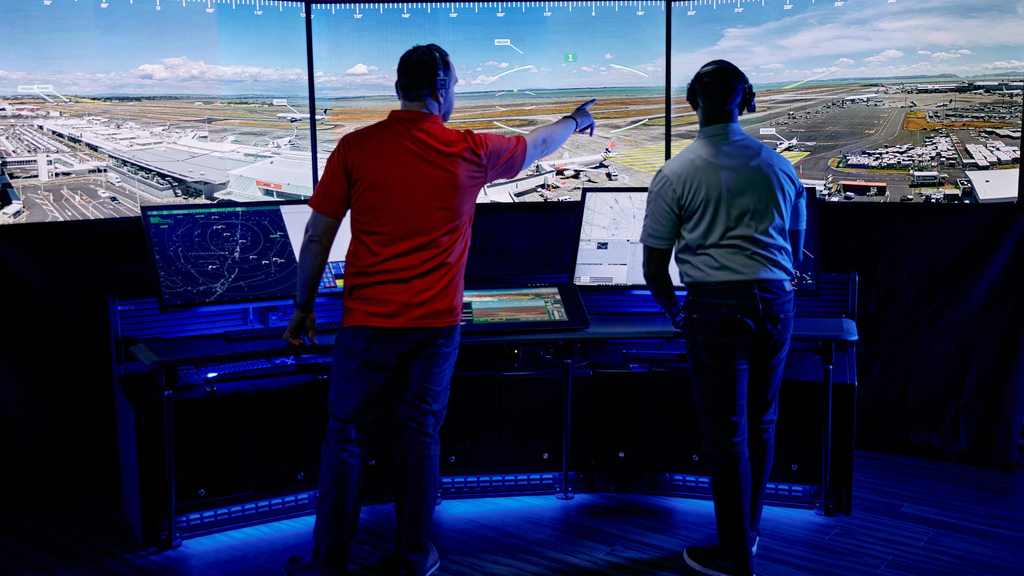
At its core, Air Traffic Management relies on a network of controllers, radar systems, satellite tracking, and communication tools that work together to monitor every aircraft in the sky. Controllers stationed in towers, approach facilities, and area control centers track flights from takeoff to landing, issuing instructions on altitude, speed, and direction. Radar and GPS-based surveillance provide real-time positioning data, while automated systems flag potential conflicts before they become dangerous. Pilots and controllers maintain constant communication, following standardized phraseology to avoid misunderstandings. This entire process is designed to maintain safe separation between aircraft, both vertically and horizontally, regardless of weather conditions or traffic density. Modern Air Traffic Management systems also integrate weather forecasting and flow management tools, allowing controllers to anticipate congestion and reroute traffic proactively rather than reactively responding to problems as they arise.
Key Components of the System
Effective Air Traffic Management depends on several interconnected components working in harmony. Each element plays a specific role, and any weak link can affect the overall safety and efficiency of airspace operations. Below are the primary components that make up a functioning system:
- Air Traffic Control Towers – manage aircraft during takeoff, landing, and ground movement
- Area Control Centers – oversee aircraft cruising at higher altitudes across large regions
- Radar and Surveillance Systems – track aircraft position, speed, and altitude in real time
- Communication Networks – enable continuous contact between pilots and controllers
- Flow Management Systems – balance traffic demand with airspace capacity
- Navigation Aids – guide aircraft along precise routes using satellite and ground-based signals
Together, these components form a layered safety net, ensuring that Air Traffic Management can respond quickly to emergencies, weather disruptions, or unexpected traffic surges.
Technology Driving Modern Air Traffic Management
Technology has transformed Air Traffic Management from a manual, radio-based process into a highly automated and data-driven discipline. Satellite navigation systems now allow for more precise aircraft tracking than traditional ground radar, enabling shorter and more direct flight paths. Automatic Dependent Surveillance-Broadcast (ADS-B) technology lets aircraft broadcast their position directly to controllers and other planes, improving situational awareness. Artificial intelligence and predictive analytics are increasingly used to forecast congestion, optimize routing, and reduce fuel consumption. Digital communication tools are gradually replacing voice-only exchanges, cutting down on errors caused by language barriers or radio interference. These technological advancements are reshaping how controllers manage airspace, making operations faster and more precise. As airspace becomes busier with commercial drones and urban air mobility vehicles, technology will remain central to keeping Air Traffic Management systems scalable and reliable for future demands.
Challenges Facing Air Traffic Management
Despite significant advancements, Air Traffic Management continues to face numerous challenges that require ongoing attention and investment. Rising passenger numbers and growing cargo traffic have pushed many airspaces near their capacity limits, leading to congestion and delays. Aging infrastructure in some regions struggles to keep pace with modern demands, creating bottlenecks that ripple across global flight schedules. Cybersecurity threats have also emerged as a serious concern, since digital systems controlling aircraft movement must be protected from potential attacks. Additionally, coordinating airspace across different countries with varying regulations and technologies remains complex, especially for international flights crossing multiple jurisdictions. Weather-related disruptions, staffing shortages, and the integration of new aircraft types, including drones, add further layers of complexity. Addressing these challenges requires continuous investment in infrastructure, training, and international cooperation to keep skies safe.
Comparison of Traditional vs Modern Air Traffic Management
| Aspect | Traditional Approach | Modern Approach |
|---|---|---|
| Tracking Method | Ground-based radar | Satellite-based (ADS-B/GPS) |
| Communication | Voice-only radio | Digital data links |
| Route Planning | Fixed airways | Flexible, optimized routing |
| Traffic Prediction | Manual estimation | AI-driven analytics |
| Coordination | Regional, isolated systems | Integrated, cross-border networks |
| Efficiency | Limited by manual processes | Higher throughput, reduced delays |
This comparison highlights how Air Traffic Management has evolved to meet the demands of a busier, more interconnected aviation industry.
Benefits of Efficient Air Traffic Management
A well-functioning Air Traffic Management system delivers benefits that extend far beyond individual flights, impacting airlines, passengers, and the broader economy. Efficient traffic flow reduces fuel consumption, which lowers operating costs for airlines and decreases environmental impact through reduced emissions. Passengers benefit from fewer delays, shorter flight times, and improved overall travel experiences. Airports operate more smoothly when arrivals and departures are properly sequenced, reducing ground congestion and runway wait times. Some key benefits include:
- Reduced flight delays and cancellations
- Lower fuel consumption and emissions
- Improved safety through better aircraft separation
- Enhanced capacity to handle growing traffic volumes
- Stronger resilience during weather disruptions
These advantages demonstrate why continuous investment in Air Traffic Management infrastructure remains a priority for governments and aviation authorities worldwide, supporting both economic growth and passenger satisfaction.
The Future of Air Traffic Management
Looking ahead, Air Traffic Management is set to undergo further transformation as new technologies and airspace users emerge. The rise of drones, urban air mobility vehicles, and commercial space launches will require more sophisticated systems capable of managing diverse and unmanned traffic alongside traditional aircraft. Artificial intelligence will likely play a larger role in predictive traffic management, automatically adjusting routes and altitudes to optimize efficiency in real time. Increased international collaboration will be necessary to harmonize standards and ensure seamless coordination across borders. Sustainability will also shape future developments, with systems designed to minimize fuel burn and support greener aviation practices. As airspace becomes more crowded and diverse, the evolution of Air Traffic Management will focus on scalability, automation, and resilience, ensuring that safety remains uncompromised even as complexity increases across the global aviation network.
Introduction to Air Traffic Management
Air Traffic Management is the backbone of modern aviation, responsible for guiding thousands of aircraft safely through crowded skies every single day. It combines technology, human expertise, and strict procedures to prevent collisions, reduce delays, and keep flights moving smoothly across national and international airspace. Without Air Traffic Management, the aviation industry as we know it simply could not function, given the sheer volume of commercial, military, and private flights operating simultaneously. This system is not limited to airports alone; it extends across entire countries and oceans, connecting control centers, radar systems, and communication networks. As global air travel continues to grow, the role of Air Traffic Management becomes even more critical in balancing safety with efficiency, ensuring that passengers reach their destinations on time while minimizing risks in increasingly congested airspace.
How Air Traffic Management Works
At its core, Air Traffic Management relies on a network of controllers, radar systems, satellite tracking, and communication tools that work together to monitor every aircraft in the sky. Controllers stationed in towers, approach facilities, and area control centers track flights from takeoff to landing, issuing instructions on altitude, speed, and direction. Radar and GPS-based surveillance provide real-time positioning data, while automated systems flag potential conflicts before they become dangerous. Pilots and controllers maintain constant communication, following standardized phraseology to avoid misunderstandings. This entire process is designed to maintain safe separation between aircraft, both vertically and horizontally, regardless of weather conditions or traffic density. Modern Air Traffic Management systems also integrate weather forecasting and flow management tools, allowing controllers to anticipate congestion and reroute traffic proactively rather than reactively responding to problems as they arise.
Key Components of the System
Effective Air Traffic Management depends on several interconnected components working in harmony. Each element plays a specific role, and any weak link can affect the overall safety and efficiency of airspace operations. Below are the primary components that make up a functioning system:
- Air Traffic Control Towers – manage aircraft during takeoff, landing, and ground movement
- Area Control Centers – oversee aircraft cruising at higher altitudes across large regions
- Radar and Surveillance Systems – track aircraft position, speed, and altitude in real time
- Communication Networks – enable continuous contact between pilots and controllers
- Flow Management Systems – balance traffic demand with airspace capacity
- Navigation Aids – guide aircraft along precise routes using satellite and ground-based signals
Together, these components form a layered safety net, ensuring that Air Traffic Management can respond quickly to emergencies, weather disruptions, or unexpected traffic surges.
Technology Driving Modern Air Traffic Management
Technology has transformed Air Traffic Management from a manual, radio-based process into a highly automated and data-driven discipline. Satellite navigation systems now allow for more precise aircraft tracking than traditional ground radar, enabling shorter and more direct flight paths. Automatic Dependent Surveillance-Broadcast (ADS-B) technology lets aircraft broadcast their position directly to controllers and other planes, improving situational awareness. Artificial intelligence and predictive analytics are increasingly used to forecast congestion, optimize routing, and reduce fuel consumption. Digital communication tools are gradually replacing voice-only exchanges, cutting down on errors caused by language barriers or radio interference. These technological advancements are reshaping how controllers manage airspace, making operations faster and more precise. As airspace becomes busier with commercial drones and urban air mobility vehicles, technology will remain central to keeping Air Traffic Management systems scalable and reliable for future demands.
Challenges Facing Air Traffic Management
Despite significant advancements, Air Traffic Management continues to face numerous challenges that require ongoing attention and investment. Rising passenger numbers and growing cargo traffic have pushed many airspaces near their capacity limits, leading to congestion and delays. Aging infrastructure in some regions struggles to keep pace with modern demands, creating bottlenecks that ripple across global flight schedules. Cybersecurity threats have also emerged as a serious concern, since digital systems controlling aircraft movement must be protected from potential attacks. Additionally, coordinating airspace across different countries with varying regulations and technologies remains complex, especially for international flights crossing multiple jurisdictions. Weather-related disruptions, staffing shortages, and the integration of new aircraft types, including drones, add further layers of complexity. Addressing these challenges requires continuous investment in infrastructure, training, and international cooperation to keep skies safe.
Comparison of Traditional vs Modern Air Traffic Management
| Aspect | Traditional Approach | Modern Approach |
|---|---|---|
| Tracking Method | Ground-based radar | Satellite-based (ADS-B/GPS) |
| Communication | Voice-only radio | Digital data links |
| Route Planning | Fixed airways | Flexible, optimized routing |
| Traffic Prediction | Manual estimation | AI-driven analytics |
| Coordination | Regional, isolated systems | Integrated, cross-border networks |
| Efficiency | Limited by manual processes | Higher throughput, reduced delays |
This comparison highlights how Air Traffic Management has evolved to meet the demands of a busier, more interconnected aviation industry.
Benefits of Efficient Air Traffic Management
A well-functioning Air Traffic Management system delivers benefits that extend far beyond individual flights, impacting airlines, passengers, and the broader economy. Efficient traffic flow reduces fuel consumption, which lowers operating costs for airlines and decreases environmental impact through reduced emissions. Passengers benefit from fewer delays, shorter flight times, and improved overall travel experiences. Airports operate more smoothly when arrivals and departures are properly sequenced, reducing ground congestion and runway wait times. Some key benefits include:
- Reduced flight delays and cancellations
- Lower fuel consumption and emissions
- Improved safety through better aircraft separation
- Enhanced capacity to handle growing traffic volumes
- Stronger resilience during weather disruptions
These advantages demonstrate why continuous investment in Air Traffic Management infrastructure remains a priority for governments and aviation authorities worldwide, supporting both economic growth and passenger satisfaction.
The Future of Air Traffic Management
Looking ahead, Air Traffic Management is set to undergo further transformation as new technologies and airspace users emerge. The rise of drones, urban air mobility vehicles, and commercial space launches will require more sophisticated systems capable of managing diverse and unmanned traffic alongside traditional aircraft. Artificial intelligence will likely play a larger role in predictive traffic management, automatically adjusting routes and altitudes to optimize efficiency in real time. Increased international collaboration will be necessary to harmonize standards and ensure seamless coordination across borders. Sustainability will also shape future developments, with systems designed to minimize fuel burn and support greener aviation practices. As airspace becomes more crowded and diverse, the evolution of Air Traffic Management will focus on scalability, automation, and resilience, ensuring that safety remains uncompromised even as complexity increases across the global aviation network.
Conclusion
Air Traffic Management remains an essential pillar of global aviation, silently coordinating the safe movement of countless flights every day. From radar systems and satellite tracking to skilled human controllers, every component works together to prevent accidents and maintain efficient airspace flow. While challenges like congestion, aging infrastructure, and cybersecurity risks persist, ongoing technological innovation continues to strengthen the system’s capabilities. As air travel demand grows and new aircraft types enter the skies, the importance of robust Air Traffic Management will only increase. Investing in modern tools, international cooperation, and skilled personnel ensures that this critical system can keep pace with the future of aviation, delivering safer, faster, and more reliable journeys for passengers and cargo across the world.
Air Traffic Management remains an essential pillar of global aviation, silently coordinating the safe movement of countless flights every day. From radar systems and satellite tracking to skilled human controllers, every component works together to prevent accidents and maintain efficient airspace flow. While challenges like congestion, aging infrastructure, and cybersecurity risks persist, ongoing technological innovation continues to strengthen the system’s capabilities. As air travel demand grows and new aircraft types enter the skies, the importance of robust Air Traffic Management will only increase. Investing in modern tools, international cooperation, and skilled personnel ensures that this critical system can keep pace with the future of aviation, delivering safer, faster, and more reliable journeys for passengers and cargo across the world.
Leave a Reply