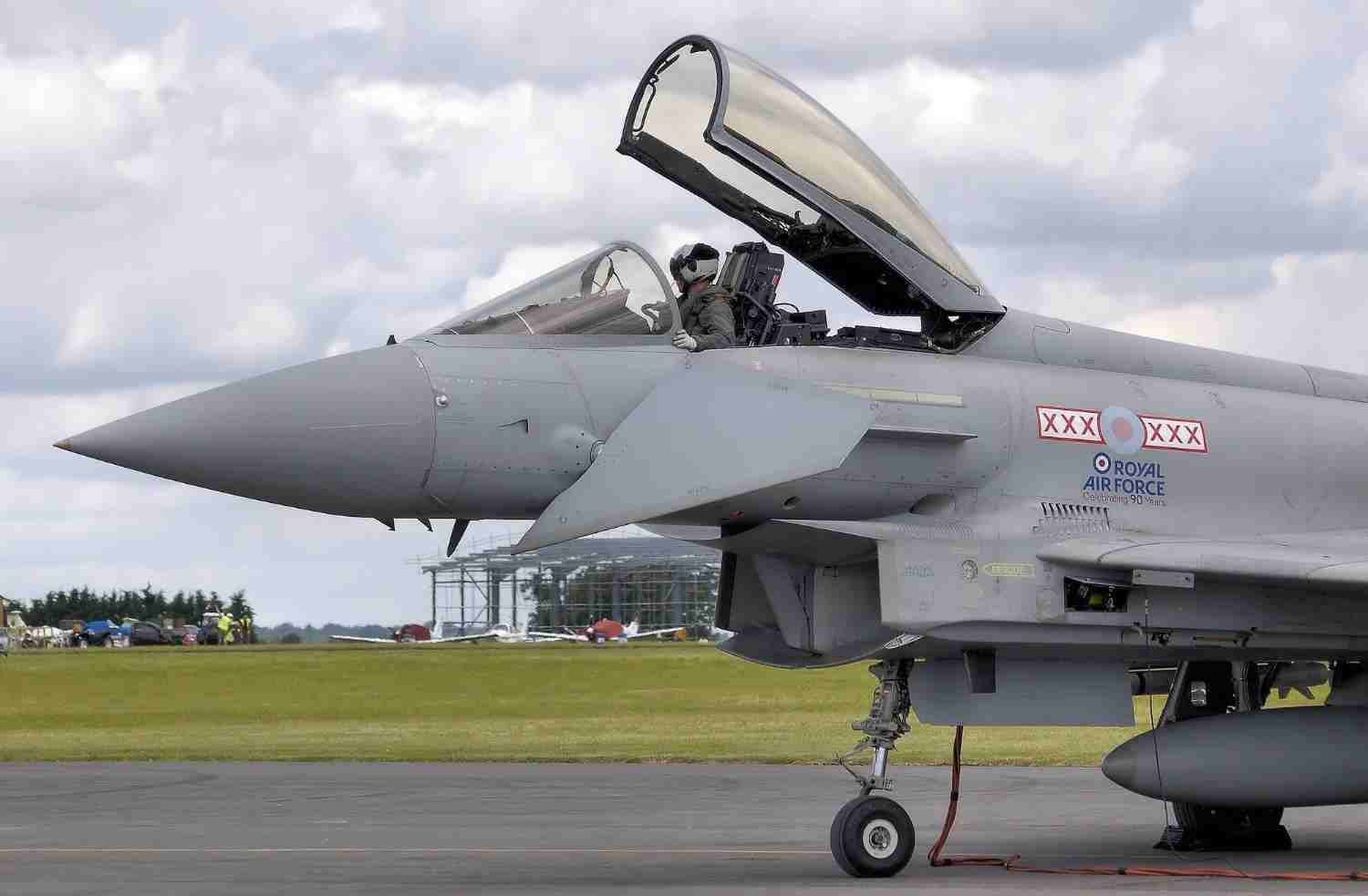
Few combat aircraft carry the reputation of the Eurofighter Typhoon, a twin-engine, delta-wing, canard-equipped multirole fighter developed jointly by the United Kingdom, Germany, Italy, and Spain. Born from a Cold War-era requirement for an agile interceptor, the aircraft evolved into one of the most capable swing-role jets flying today, equally comfortable defending airspace or striking ground targets with precision. Its unusual aerodynamic layout, combining a canard foreplane with a sharply swept delta wing, gives it exceptional turn rates and short-field performance that few rivals can match.
Manufactured through a consortium involving Airbus, BAE Systems, and Leonardo, the jet represents one of the largest collaborative defense programs in European history. Decades after its first flight, the Eurofighter Typhoon remains in continuous production, a rare achievement for any fourth-generation-plus fighter still competing against newer stealth designs.
Origins and Development Story
The program traces back to the 1980s, when several European nations sought a replacement for aging interceptors capable of countering Soviet bombers and fighters. France initially participated but withdrew to pursue its own Rafale program, leaving four core partner nations to finish the job. First flight occurred in 1994, and the aircraft entered frontline squadron service in the early 2000s.
Development was staged in tranches, each introducing structural refinements, updated avionics, and expanded weapons integration. Tranche 1 aircraft were more limited in scope, while Tranche 2 and Tranche 3 versions added strengthened airframes and greater multirole flexibility. This phased approach allowed partner air forces to field the jet quickly while continuously improving later batches, a strategy that has kept the platform relevant well beyond its original design horizon.
Design Philosophy and Airframe
The aircraft’s canard-delta configuration was chosen deliberately for a blend of agility and stability rarely found together in a single airframe. Key structural characteristics include:
- A relaxed-stability design managed by quadruplex digital fly-by-wire controls
- Extensive use of carbon-fiber composites to reduce weight and radar signature
- Twin Eurojet EJ200 engines producing high thrust-to-weight performance
- A frameless canopy offering nearly unobstructed pilot visibility
This combination allows the jet to sustain tight turns at high angles of attack while retaining enough stability for stable weapons delivery. Pilots consistently praise its handling qualities, particularly in close-in dogfighting scenarios where energy retention through hard maneuvers is critical. The airframe was also engineered with growth in mind, leaving room for decades of sensor and weapons upgrades.
Sensors, Avionics, and Cockpit Evolution
Modern variants of the Eurofighter Typhoon field increasingly sophisticated sensor suites. Later production batches carry the ECRS Mk1 active electronically scanned array radar from Hensoldt and Indra, replacing earlier mechanically scanned systems and dramatically improving detection range, target tracking, and electronic attack capability. The Praetorian defensive aids sub-system provides threat warning and countermeasures, while the PIRATE infrared search and track sensor allows passive target detection without emitting a radar signal.
Cockpit technology has also advanced substantially. Newer upgrade packages introduce large touchscreen panoramic displays, helmet-mounted sight systems, and improved pilot-vehicle interfaces designed to reduce workload during complex missions. These enhancements keep the jet competitive against more recently designed fighters, even though its basic airframe dates back to the 1990s. Continuous software-driven upgrades mean capability grows steadily without requiring an entirely new aircraft design.
Weapons and Combat Roles
Versatility defines the Eurofighter Typhoon’s operational identity. It carries a wide spectrum of air-to-air and air-to-ground munitions, allowing squadrons to switch roles between sorties or even within a single mission profile.
- Air-to-air: Meteor and AIM-120 AMRAAM beyond-visual-range missiles, plus ASRAAM and IRIS-T for close combat
- Air-to-ground: Paveway and Brimstone precision-guided weapons, along with Storm Shadow cruise missiles for deep-strike missions
- A 27mm Mauser cannon for close-range engagements
- Reconnaissance pods and targeting systems for intelligence-gathering roles
This broad weapons catalog has been proven operationally, including missions over Libya and involvement in NATO air-policing rotations across the Baltic and Black Sea regions. The aircraft’s ability to carry heavy external loads while retaining maneuverability makes it well suited to both high-intensity conflict and lower-tempo deterrence patrols.
Global Operators and Fleet Numbers
Beyond its four founding nations, the Eurofighter Typhoon has found a growing export market. Austria, Saudi Arabia, Oman, Qatar, and Kuwait already operate the type, and Türkiye finalized a deal in late 2025 for new-build jets supplemented by second-hand aircraft transferred from Oman and Qatar. Well over six hundred Typhoons are currently active worldwide, and total orders across all customers now approach 770 aircraft, figures that keep climbing as European nations respond to shifting security conditions.
| Operator | Approx. Fleet Status | Notable Detail |
|---|---|---|
| United Kingdom | Core founding nation | Backbone of RAF quick-reaction alert force |
| Germany | Core founding nation | Ordering additional Tranche 4/5 aircraft |
| Italy | Core founding nation | Up to 24 new jets contracted recently |
| Spain | Core founding nation | 25 new aircraft ordered in late 2024 |
| Saudi Arabia | Major export customer | Large fleet acquired from 2007 onward |
| Qatar | Export customer | Deliveries began in 2023 |
| Türkiye | New export customer | Deal finalized in late 2025 |
Recent Orders and Upgrade Momentum
Rather than winding down, the program has seen renewed demand. Germany’s Luftwaffe committed to twenty additional Tranche 5 jets, featuring the latest E-Scan radar technology and Saab’s Arexis electronic warfare suite, with deliveries expected between 2031 and 2034. Spain and Italy have placed comparable orders, reflecting a broader European push to reinforce fighter fleets amid heightened regional security concerns. Radar suppliers Hensoldt and Indra have both reported strong order growth tied directly to these contracts.
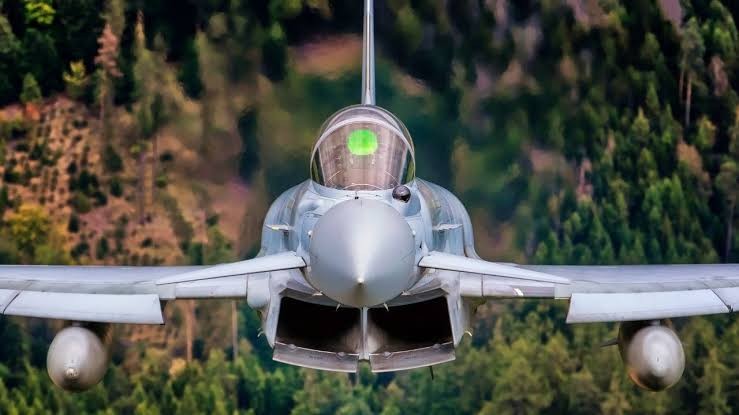
This renewed momentum matters for several reasons. It sustains tens of thousands of manufacturing jobs across four countries, keeps the supply chain for spare parts and upgrades active for decades, and signals confidence that the jet can remain militarily relevant alongside newer stealth aircraft entering service elsewhere. Industry officials frequently describe the program as a bridge toward Europe’s next-generation combat aircraft initiatives, rather than a platform in decline.
How It Compares to Rival Fighters
When measured against other fourth-generation-plus jets like the Dassault Rafale, F-15EX, or Saab Gripen, the Eurofighter Typhoon stands out for raw kinematic performance, particularly its climb rate and high-altitude agility. It generally trades some multirole flexibility for outright air superiority strength, though continuous upgrades have narrowed that gap considerably. Compared to fifth-generation stealth fighters, it lacks low-observable characteristics, but its sensor fusion, payload capacity, and cost-effectiveness make it an attractive complement within a mixed fleet rather than a direct stealth competitor.
Export customers often weigh these trade-offs carefully. Nations prioritizing interceptor speed, dogfighting agility, and proven combat record tend to favor the Typhoon, while those needing low-observable penetration capability look elsewhere or plan to operate both types together, as several European air forces already do alongside F-35 fleets.
Looking Ahead
The future of the program is tied closely to continuous capability insertion rather than a single dramatic redesign. Planned upgrades include further radar refinements, expanded electronic warfare integration, and potential connectivity improvements linking the jet into broader networked combat systems. Some partner nations envision the aircraft flying alongside next-generation platforms currently in development, serving as a cost-effective complement to more advanced stealth fighters for years to come.
Given the scale of recent orders stretching into the mid-2030s, production lines show no sign of closing soon. For air forces balancing budget realities against genuine combat capability, the aircraft continues to offer a proven, adaptable solution.
Final Thoughts
More than three decades after its first flight, the Eurofighter Typhoon remains a defining symbol of European defense cooperation and engineering ambition. Its blend of aerodynamic agility, expanding sensor technology, and diverse weapons integration has kept it relevant against increasingly modern competition, while fresh orders from founding nations and new export customers confirm its continued strategic value. As upgrade programs push capability further into the 2030s, the jet is set to remain a cornerstone of European and allied airpower for a long time yet, proof that thoughtful, sustained investment can keep even a decades-old design genuinely competitive on the modern battlefield.
Leave a Reply