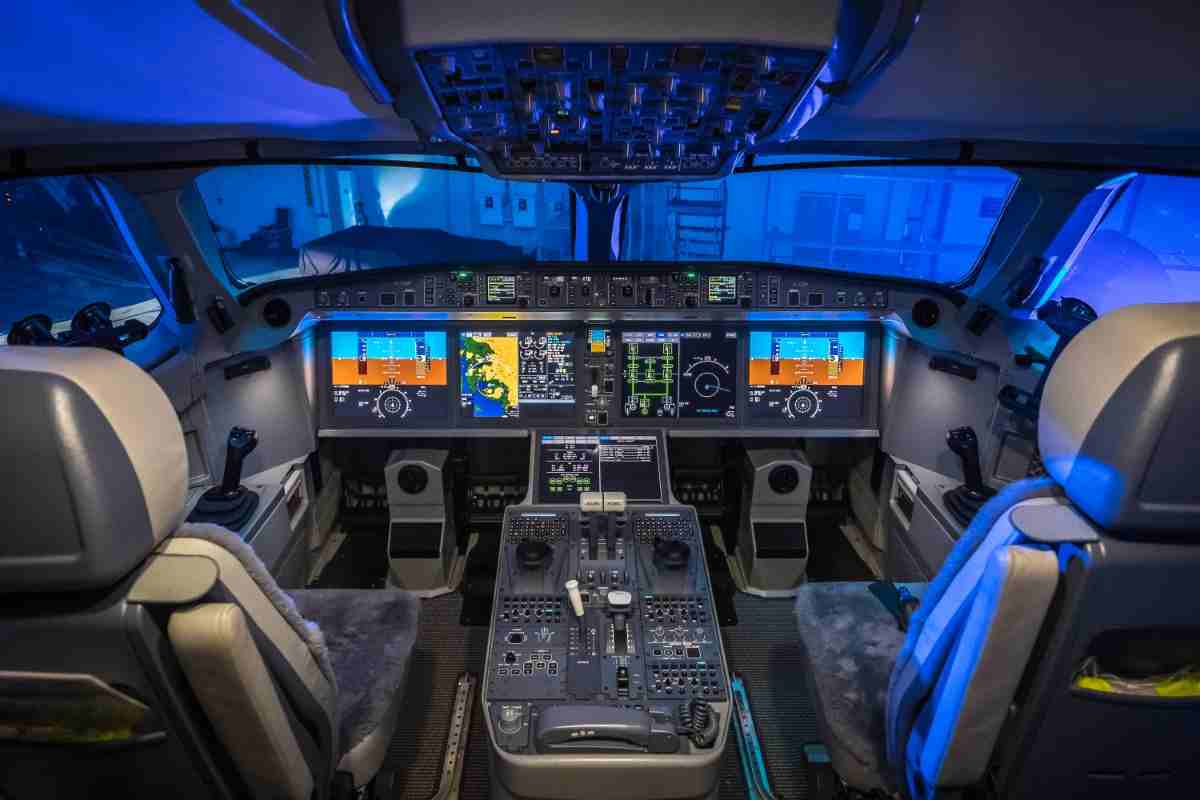
Step inside the cockpit of a modern airliner and you will notice something immediately: the maze of analog dials that once defined aviation has largely disappeared. In its place sits a clean array of digital screens, touch-sensitive panels, and computer-driven controls. This shift represents one of the most significant transformations in aviation history. Flight deck technology has quietly reshaped how pilots fly, how airlines operate, and how safely passengers travel from one continent to another. What was once a workspace crowded with mechanical gauges is now a streamlined command center built around software, sensors, and automation working in constant coordination.
The Shift from Analog to Digital Cockpits
For decades, pilots relied on mechanical instruments that measured altitude, speed, and heading through physical gears and pressure systems. These setups required constant cross-checking and left little room for integrated data. The introduction of digital flight deck technology changed that reality entirely. Glass cockpits, built around liquid crystal displays, consolidated dozens of separate instruments into a handful of customizable screens. Pilots could now view engine performance, navigation data, and weather information on unified panels rather than scattered dials. This consolidation reduced clutter, minimized reading errors, and gave flight crews a clearer picture of aircraft status at any given moment, fundamentally changing how information reaches the people flying the plane.
Fly-By-Wire Systems and Precision Control
One of the most influential advances tied to flight deck technology is the fly-by-wire system, which replaces traditional mechanical linkages with electronic signals. Instead of cables and hydraulic lines connecting the control column directly to control surfaces, computers interpret pilot inputs and translate them into precise movements. This approach improves handling accuracy, reduces mechanical wear, and allows built-in safety limits that prevent aircraft from exceeding safe flight parameters. Airbus and Boeing both rely heavily on these systems, though their philosophies differ slightly in how much authority remains with the pilot versus the computer. Either way, the result is smoother handling and a meaningful reduction in pilot fatigue during long-haul operations.
Heads-Up Displays and Situational Awareness
Heads-up displays, commonly known as HUDs, project critical flight data directly onto a transparent screen in front of the pilot’s line of sight. This innovation allows pilots to monitor speed, altitude, and runway alignment without glancing down at the instrument panel. Particularly during landing in low visibility, this feature has become indispensable. As a component of modern flight deck technology, HUDs reduce the time it takes to process information, which can be critical during high-workload phases of flight. Many newer aircraft now pair HUDs with enhanced vision systems that use infrared cameras to reveal runway features through fog, haze, or heavy rain, giving pilots an additional layer of confidence during approach.
Automation and Flight Management Systems
Automation sits at the core of nearly every advancement in flight deck technology. Flight management systems calculate optimal routes, fuel burn, and climb profiles long before an aircraft leaves the gate. Once airborne, autopilot and autothrottle systems handle much of the routine flying, allowing pilots to focus on monitoring rather than manual control. This does not mean pilots are removed from the loop; rather, their role shifts toward supervision and decision-making during unexpected events. Some professionals argue this evolution has introduced new challenges, such as complacency or skill erosion during long automated segments. Airlines address this by requiring regular manual flying practice to keep hands-on proficiency sharp.
Touchscreen Interfaces and Modern Ergonomics
Newer aircraft models are increasingly incorporating touchscreen panels similar to consumer electronics, replacing traditional knobs and switches. This shift in flight deck technology mirrors broader design trends seen in cars and personal devices, where intuitive gestures replace mechanical buttons. Touchscreens allow for dynamic customization; a pilot can rearrange displayed information based on the phase of flight, prioritizing navigation charts during cruise and approach data during descent. However, designers must carefully balance touchscreen convenience against turbulence-related usability concerns, since shaky conditions can make precise taps difficult. Many manufacturers combine touchscreens with physical backup controls to ensure functionality even when smooth interaction is not possible.
Sensor Fusion and Data Integration
Behind every screen in a modern cockpit lies a web of sensors constantly feeding information into onboard computers. Sensor fusion combines data from radar, GPS, inertial reference units, and external weather feeds into a single coherent picture. This integration is a defining feature of contemporary flight deck technology, allowing pilots to see far more than what any single instrument could reveal on its own. For example, combining weather radar with satellite data helps crews anticipate turbulence long before it becomes noticeable. This layered awareness supports better decision-making, particularly during long transoceanic flights where real-time updates from ground control may be limited.
Comparing Cockpit Generations
The table below illustrates how cockpit design has evolved across different generations of commercial aircraft, highlighting the practical differences pilots experience.
| Cockpit Generation | Primary Instrumentation | Pilot Workload | Key Technology |
|---|---|---|---|
| Analog Era (1960s-1980s) | Mechanical gauges and dials | High, manual cross-checking | Steam gauges |
| Early Digital (1990s) | CRT-based glass displays | Moderate, some automation | Early flight management systems |
| Modern Glass Cockpit (2000s-2010s) | LCD multifunction displays | Reduced, supervisory focus | Fly-by-wire, HUDs |
| Next-Generation Cockpit (2020s onward) | Touchscreen and adaptive displays | Lower routine load, higher monitoring demand | Sensor fusion, AI-assisted alerts |
Safety Improvements Driven by Cockpit Innovation
Safety statistics across commercial aviation have improved dramatically alongside advances in flight deck technology. Traffic collision avoidance systems alert pilots to nearby aircraft long before visual contact would be possible. Terrain awareness systems warn crews if an aircraft is approaching high ground unexpectedly, a factor that once contributed to a significant share of accidents. These tools do not eliminate human error entirely, but they narrow the margin for catastrophic mistakes. Some of the safety gains linked to modern cockpit systems include:
- Earlier detection of mechanical or system anomalies through continuous monitoring
- Reduced pilot workload during high-stress phases like takeoff and landing
- Improved coordination between air traffic control and onboard navigation systems
- Faster identification of weather hazards through integrated radar and satellite feeds
Training Challenges in a Technology-Driven Cockpit
As flight deck technology becomes more sophisticated, pilot training programs must evolve alongside it. New hires now spend considerable time learning software logic, system redundancies, and automation modes rather than purely manual flying skills. Simulators have become indispensable, replicating digital cockpit environments with remarkable accuracy so pilots can practice failure scenarios without real-world risk. Airlines also emphasize cross-training between aircraft models, since interfaces can vary significantly even within the same manufacturer’s fleet. This growing complexity means that understanding automation logic has become just as important as understanding aerodynamics, reshaping what it means to be a well-rounded pilot in the current era.
The Role of Artificial Intelligence in Future Cockpits
Looking ahead, artificial intelligence is poised to play a larger role in shaping flight deck technology. Predictive maintenance algorithms can flag potential mechanical issues before they cause in-flight problems, while intelligent alerting systems aim to reduce unnecessary warnings that distract crews during critical moments. Some manufacturers are exploring reduced-crew or single-pilot operations for certain aircraft categories, relying on advanced automation to handle tasks traditionally requiring a second set of hands. While full autonomy in commercial aviation remains distant, the incremental integration of AI-driven tools suggests that future cockpits will continue shifting pilot roles further toward supervision, judgment, and exception handling rather than constant manual input.
Environmental and Efficiency Considerations
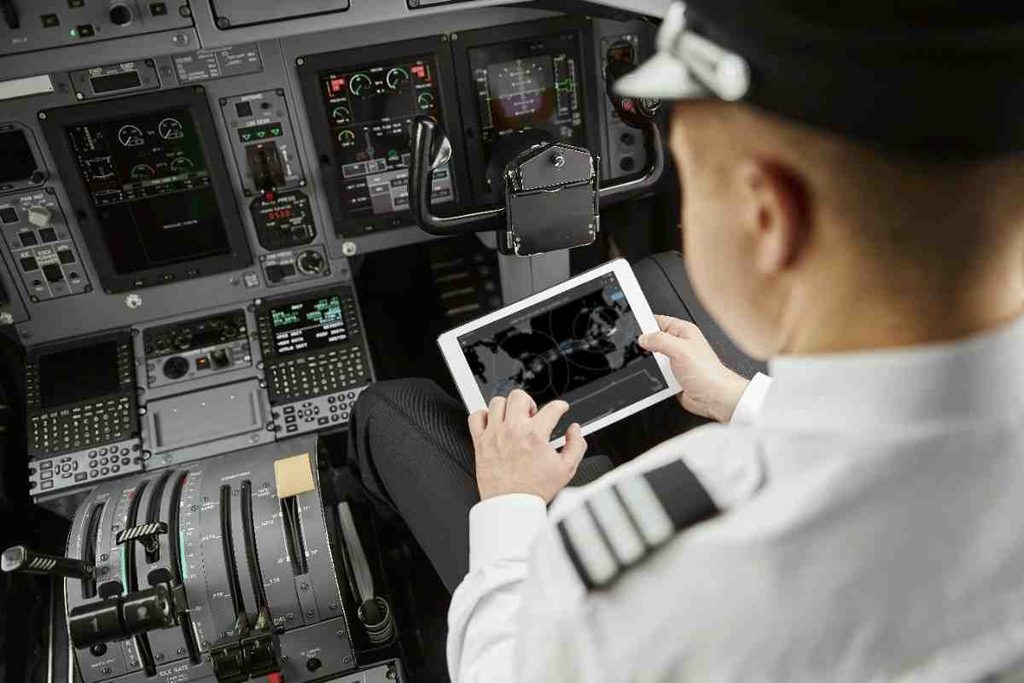
Beyond safety, flight deck technology also contributes meaningfully to fuel efficiency and environmental performance. Advanced flight management computers calculate optimal cruise altitudes and speeds that minimize fuel burn based on real-time weather and traffic data. Continuous descent approaches, guided by precise navigation systems, reduce unnecessary engine thrust during landing sequences. These small adjustments, multiplied across thousands of daily flights, translate into substantial fuel savings and lower emissions industry-wide. Airlines increasingly view cockpit innovation not just as a safety or convenience upgrade, but as a genuine tool for meeting environmental targets, making technology investment a strategic priority rather than a purely operational one.
Conclusion
The modern cockpit tells a story of continuous transformation, one driven by the pursuit of safer skies, smarter automation, and more intuitive human-machine interaction. From the disappearance of analog dials to the rise of touchscreen interfaces and AI-assisted decision-making, flight deck technology has redefined what it means to fly an aircraft. Pilots today operate within systems that anticipate problems, filter information intelligently, and reduce workload during the most demanding moments of flight. Yet amid all this innovation, human judgment remains irreplaceable, guiding decisions that no algorithm can fully replicate. As aviation moves further into an era shaped by data and automation, the relationship between pilot and machine will only grow more refined, ensuring that every advancement ultimately serves the same enduring goal: getting people to their destinations safely.
Leave a Reply