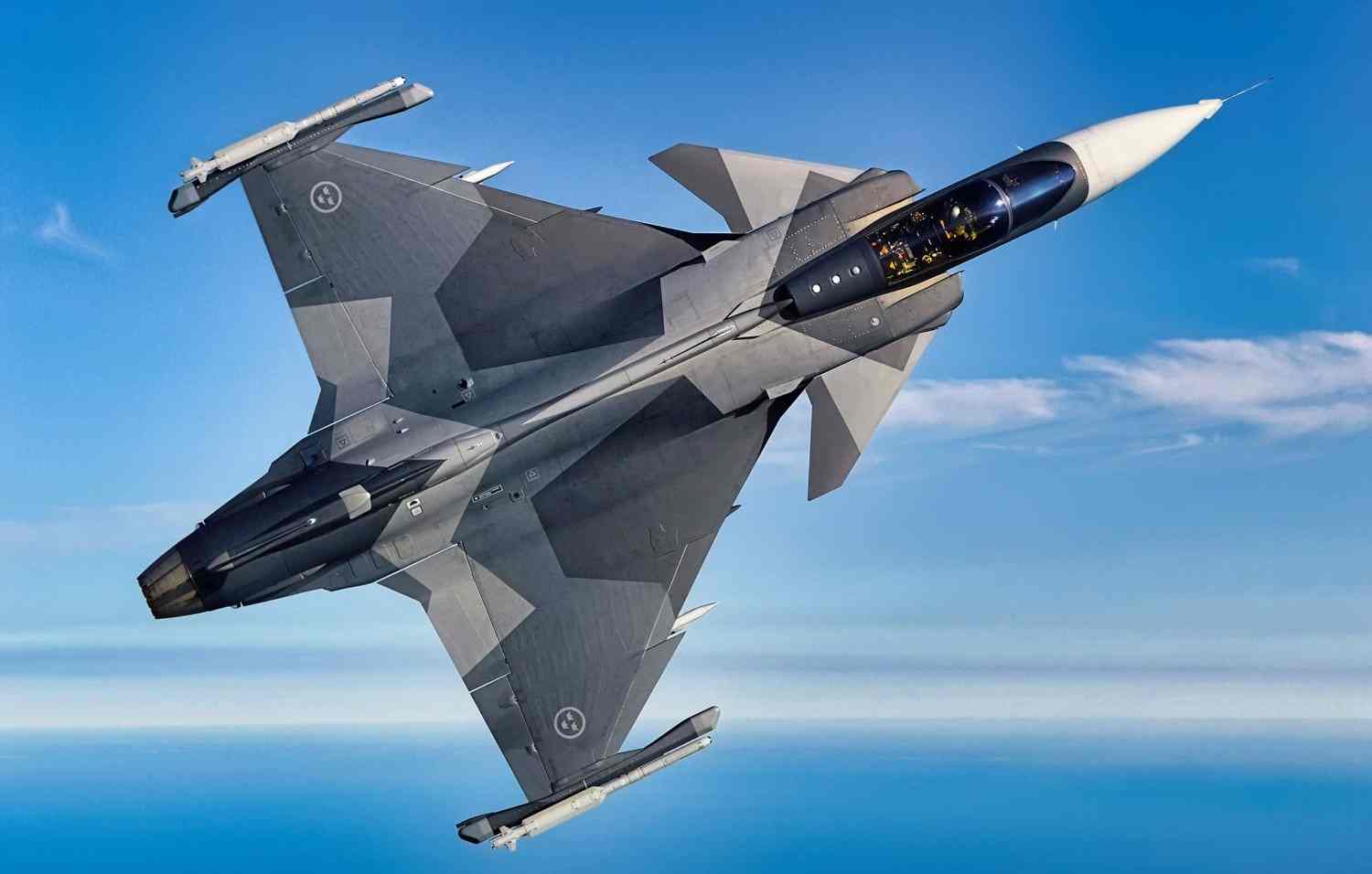
Saab JAS 39 Gripen stands out as one of the most cost-effective and technologically advanced fighter aircraft ever produced in Europe. Designed and manufactured by the Swedish aerospace company Saab, this lightweight multirole combat jet has earned a reputation for combining affordability with cutting-edge performance. Unlike many contemporary fighters that demand massive budgets and extensive support infrastructure, the Saab JAS 39 Gripen was built with a different philosophy in mind: deliver frontline capability without the crushing operational costs typically associated with fourth and fifth generation aircraft. This approach has made it attractive not just to Sweden’s own air force but to several nations seeking a reliable, adaptable fighter that doesn’t strain national defense budgets.
A Brief History Behind the Gripen Program
The origins of the Saab JAS 39 Gripen trace back to the early 1980s when Sweden sought a replacement for its aging fleet of Viggen and Draken aircraft. The letters “JAS” stand for Jakt, Attack, Spaning, which translate to Fighter, Attack, and Reconnaissance in Swedish. This naming convention reflects the aircraft’s core design goal: a single airframe capable of performing multiple combat roles rather than relying on separate specialized planes. Development began under intense pressure to create something that could match international rivals while remaining affordable for a relatively small nation like Sweden.
The first prototype flew in 1988, though the program faced early setbacks, including a crash during a public demonstration in 1989 caused by flight control software issues. Engineers addressed these problems, and the aircraft entered operational service with the Swedish Air Force in the mid-1990s. Since then, continuous upgrades have kept the platform relevant, transforming it from a promising but troubled project into one of the most respected fighter programs in the world today.
Design Philosophy and Engineering Priorities
What truly sets the Saab JAS 39 Gripen apart is its underlying design philosophy. Sweden’s unique defense doctrine required an aircraft capable of operating from dispersed road bases rather than centralized, vulnerable airfields. This concept, known as Bas 90, demanded a fighter that could be serviced, refueled, and rearmed by small ground crews in austere conditions within minutes. As a result, engineers prioritized simplicity, reliability, and ease of maintenance alongside raw performance.
The aircraft’s delta wing and canard configuration provide excellent agility and short takeoff and landing capabilities, allowing it to use narrow highway strips as improvised runways. This flexibility gives operating nations a significant strategic advantage during conflicts where traditional airbases might be targeted early. Additionally, the jet’s relatively small radar cross-section and lightweight airframe contribute to lower fuel consumption and reduced lifecycle costs compared to heavier competitors, making it a practical choice for air forces balancing capability against budget constraints.
Key Variants of the Aircraft
Over the decades, several distinct versions of the Saab JAS 39 Gripen have emerged, each improving upon the last with better avionics, engines, and weapons integration. Understanding these variants helps clarify how the platform has evolved to meet changing threats and customer requirements.
- Gripen A/B: The original production models, featuring early avionics and analog cockpit displays, primarily used for initial Swedish Air Force deployment.
- Gripen C/D: Introduced NATO-compatible systems, aerial refueling capability, and improved sensors, making it exportable to international customers.
- Gripen E/F: The latest generation, featuring a more powerful engine, active electronically scanned array radar, expanded fuel capacity, and significantly enhanced electronic warfare systems.
Each generation reflects lessons learned from operational experience and shifting geopolitical demands, ensuring the aircraft remains competitive against newer fifth-generation designs despite its fourth-generation heritage.
Performance Specifications and Capabilities
Performance remains a central selling point for the Saab JAS 39 Gripen, particularly when measured against its operating costs. The jet uses a single Volvo Aero RM12 engine in earlier models, while the newer Gripen E relies on the more powerful General Electric F414G, delivering greater thrust and improved fuel efficiency. This upgrade alone dramatically extends range and payload capacity compared to earlier variants.
Below is a simplified comparison of key specifications across different Gripen generations:
| Feature | Gripen C/D | Gripen E/F |
|---|---|---|
| Engine | Volvo RM12 | GE F414G |
| Max Speed | Mach 2.0 | Mach 2.0 |
| Combat Radius | ~800 km | ~1,300 km |
| Radar Type | Mechanically scanned | AESA |
| Hardpoints | 8 | 10 |
| Fuel Capacity | Standard internal | Increased internal |
This table illustrates how substantial the leap has been between generations, particularly regarding combat radius and sensor technology, both of which directly influence mission flexibility and survivability in contested airspace.
Avionics and Weapons Systems
Modern variants of the Saab JAS 39 Gripen incorporate some of the most sophisticated avionics available on a lightweight fighter platform. The Gripen E’s active electronically scanned array radar allows pilots to track multiple targets simultaneously while maintaining a lower probability of detection compared to older mechanically scanned systems. Combined with advanced electronic countermeasures, infrared search and track sensors, and a helmet-mounted display, pilots gain exceptional situational awareness even in heavily contested electronic warfare environments.
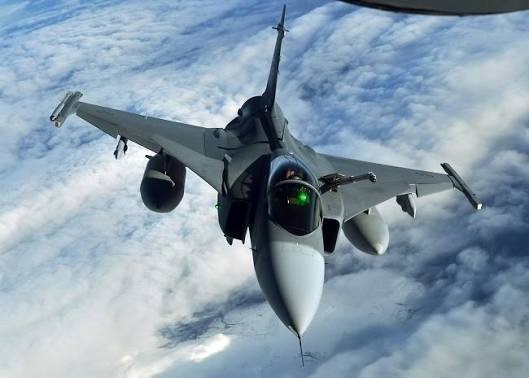
Weapons integration has also expanded considerably. The aircraft can carry a diverse arsenal including short and medium-range air-to-air missiles, precision-guided bombs, anti-ship missiles, and reconnaissance pods. Its ten hardpoints on the Gripen E variant allow for flexible loadouts tailored to specific mission profiles, whether that involves air superiority, close air support, or maritime strike operations. This adaptability reinforces the aircraft’s multirole identity, allowing a single squadron to switch between mission types without needing entirely different airframes.
International Operators and Export Success
Beyond Sweden, the Saab JAS 39 Gripen has found homes in several air forces around the globe, a testament to its export appeal. Countries such as the Czech Republic, Hungary, South Africa, Thailand, and Brazil operate various Gripen versions, often citing lower acquisition and maintenance costs as deciding factors over competing Western fighters. Brazil, in particular, selected the Gripen E as the backbone of its future air combat capability, partnering with Saab on local production and technology transfer arrangements.
This export success stems partly from Saab’s willingness to offer flexible financing, technology sharing agreements, and offset programs that benefit the purchasing nation’s domestic industry. For countries wary of political strings often attached to fighter jet purchases from larger powers, Sweden’s comparatively neutral defense export policies present an appealing alternative. This diplomatic flexibility, paired with genuine technical merit, has allowed the aircraft to compete successfully against larger, better-funded rival programs in international tenders.
Cost Efficiency Compared to Rivals
One of the most frequently cited advantages of the Saab JAS 39 Gripen involves its remarkably low cost per flight hour relative to other modern fighters. While exact figures vary depending on configuration and operating nation, estimates consistently place the Gripen’s operating costs well below those of aircraft like the F-35 or Eurofighter Typhoon. This efficiency stems from its simpler maintenance requirements, smaller logistical footprint, and design choices that prioritize practical serviceability over sheer technological complexity.
For smaller air forces or nations with constrained defense budgets, this cost advantage can mean the difference between fielding a credible modern air fleet and struggling to maintain aging equipment. The ability to conduct more training sorties, maintain higher readiness rates, and stretch defense spending further gives operators of this aircraft a practical edge that raw performance statistics alone cannot capture. This pragmatic value proposition continues to resonate strongly in an era of tightening global defense budgets.
Role in Modern Air Combat Doctrine
As air combat increasingly emphasizes networked warfare, electronic dominance, and rapid deployment flexibility, the Saab JAS 39 Gripen has adapted accordingly. Its data-link systems allow seamless information sharing between aircraft, ground control stations, and even naval assets, enabling coordinated operations that extend well beyond traditional dogfighting scenarios. This networking capability transforms individual jets into nodes within a broader combat ecosystem, amplifying their effectiveness far beyond what their physical specifications alone might suggest.
Furthermore, the aircraft’s dispersed basing concept remains highly relevant today, particularly as military planners reconsider the vulnerability of fixed airbases to modern precision strike weapons. The ability to operate from improvised locations, refuel quickly, and return to combat readiness within minutes provides genuine strategic resilience that many larger, more centralized fighter programs simply cannot match.
Conclusion
The Saab JAS 39 Gripen represents a remarkable achievement in balancing performance, affordability, and operational pragmatism within modern fighter aircraft design. From its origins addressing Sweden’s unique defense requirements to its current status as a competitive export success, the aircraft has consistently demonstrated that cutting-edge capability doesn’t require astronomical budgets. Its evolution through multiple generations, culminating in the highly capable Gripen E variant, shows Saab’s commitment to continuous improvement rather than resting on past achievements.
For nations seeking a credible, adaptable, and financially sustainable air combat solution, this Swedish fighter continues to offer a compelling alternative to costlier Western and Eastern competitors. As global defense priorities shift toward resilience, networked warfare, and budget consciousness, the Saab JAS 39 Gripen appears well positioned to remain relevant for years to come, proving that thoughtful engineering often outperforms sheer technological excess when practical combat effectiveness is the ultimate measure of success.
Leave a Reply