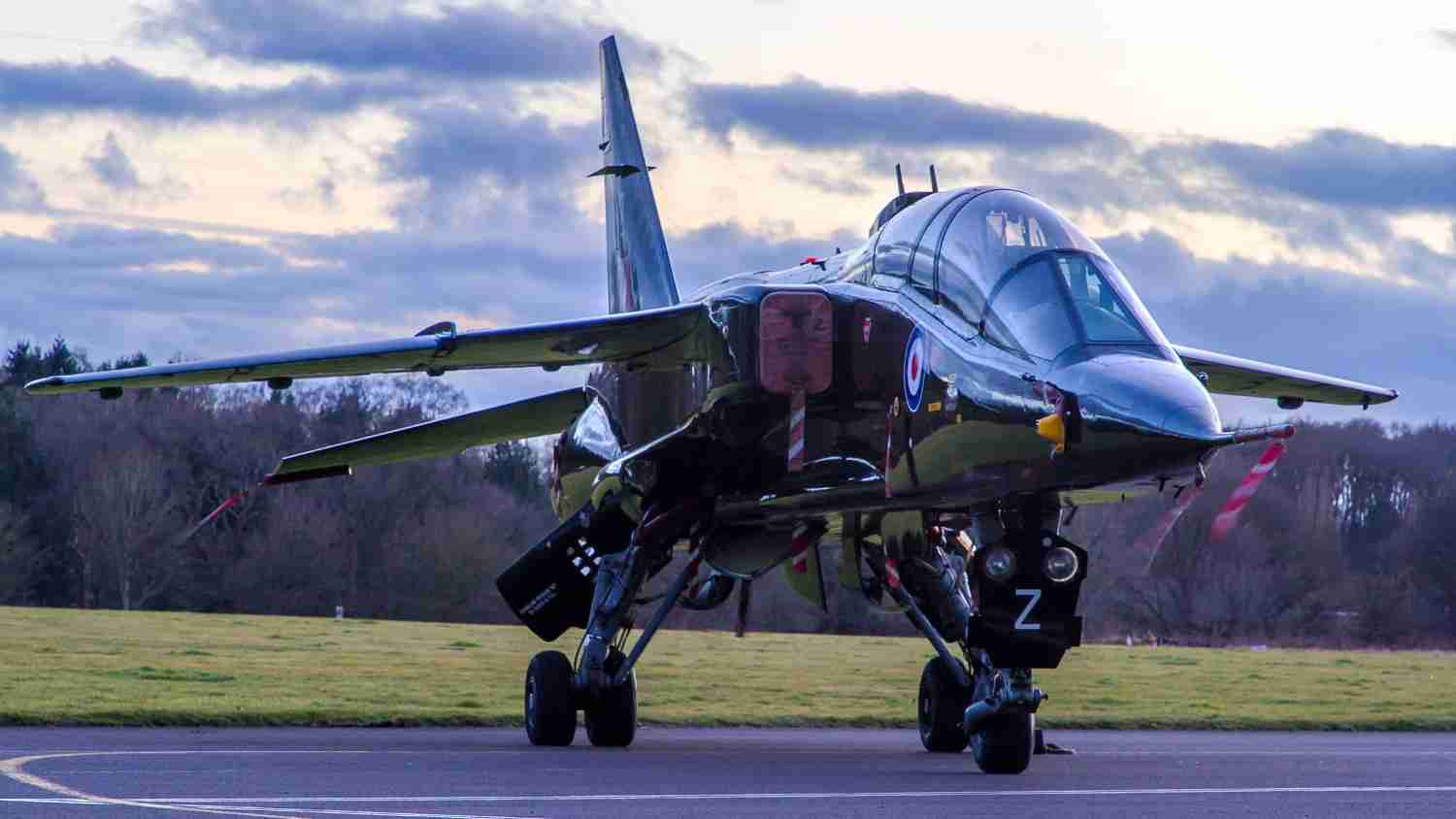
The SEPECAT Jaguar never won the headlines that supersonic interceptors or stealth fighters enjoy, yet it served for more than three decades in some of the most demanding places on earth. Built jointly by British and French manufacturers, this compact twin-engine jet was designed to hit ground targets fast and low, then return home from short, rough airstrips. It flew over the Sahel, the Gulf, the Balkans, and the Himalayan foothills, and some airframes are still airborne today. Its story is one of pragmatism: two governments with different budgets and habits agreeing on one machine that could do a hard job reliably. This article covers where the idea came from, how the design worked, which versions existed, where it fought, and what it left behind for later strike aircraft.
Why Two Nations Built One Jet
In the early 1960s, both Britain and France were looking at ageing training fleets and worried about the cost of developing aircraft alone. The French air force wanted a supersonic advanced trainer that could also handle light attack work, while the Royal SEPECAT Jaguar needed something to prepare pilots for high-performance types. A government agreement in 1965 pushed the two sides together, and in 1966 Breguet and the British Aircraft Corporation formed a joint company called SEPECAT to run the programme. The engines came from a similar partnership between Rolls-Royce and Turbomeca, which produced the Adour turbofan. As requirements matured, the trainer role faded and a dedicated tactical strike aircraft took its place, because air staffs realised that a capable low-level attacker was the more valuable purchase. The first prototype flew in September 1968, and the first British-configured aircraft followed in 1969. Production ultimately reached roughly 540 aircraft, with about 200 each for the two founding air forces and the remainder going to export buyers.
Design Choices That Shaped the Airframe
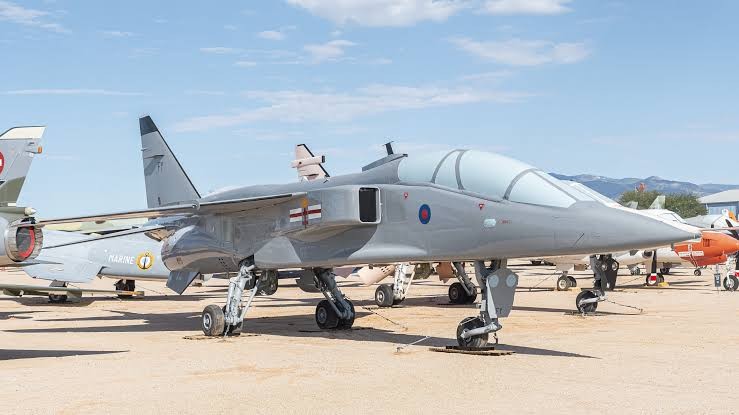
Engineers chose a layout that favoured toughness over glamour. A high-mounted swept wing gave a stable ride at low altitude, where turbulence punishes lighter aircraft, and it left the underside free for stores. The twin Adour engines offered redundancy, which mattered for pilots flying close to the ground in hostile territory. Long-stroke landing gear and low-pressure tyres let the aircraft operate from damaged runways or even roads, a capability France valued for its African deployments. Five hardpoints could carry around 4,500 kilograms of bombs, rockets, missiles, and drop tanks, while two 30 mm cannon sat inside the fuselage. British aircraft gained a laser rangefinder in a chisel-shaped nose, while French machines kept a more conventional profile. The cockpit was cramped and the early avionics were basic, yet accuracy improved steadily through upgrades. Top speed was a little beyond Mach 1 at height, but designers cared far more about handling at treetop level than about straight-line records.
Variants at a Glance
The SEPECAT Jaguar family grew into several distinct models, summarised below.
| Variant | Main User | Role and Notes |
|---|---|---|
| Jaguar A | France | Single-seat attack aircraft, able to carry a tactical nuclear bomb |
| Jaguar E | France | Two-seat trainer with limited combat capability |
| Jaguar S (GR.1 and later) | United Kingdom | Single-seat strike aircraft with a laser rangefinder in the nose |
| Jaguar B (T.2) | United Kingdom | Two-seat conversion and continuation trainer |
| Jaguar International | Ecuador, Nigeria, Oman | Export version, some with overwing missile pylons |
| Jaguar IS (Shamsher) | India | Licence-built strike aircraft, repeatedly modernised |
Where the Jaguar Went to War
French Jaguars saw action earliest, supporting operations in Mauritania in the late 1970s and in Chad through the 1980s, where they attacked convoys and airfields far from home bases. In 1986 they struck the Ouadi Doum airstrip in northern Chad, a well-known example of low-level precision work in a desert environment. During the 1991 Gulf War, British and French aircraft joined the coalition; RAF machines flew from Bahrain and attacked Iraqi positions, while French aircraft operated from Saudi Arabia. In the following years, British Jaguars patrolled northern Iraq and flew missions connected to the Bosnian conflict from Italy. Crews often praised the aircraft’s forgiving handling and dependable systems, even when its age showed against newer fighters. Across these missions, the SEPECAT Jaguar earned a reputation as a workhorse that could return home carrying damage that might have doomed lighter, single-engine types.
Export Customers and the Indian Story
Outside the two founding nations, Ecuador, Nigeria, and Oman bought export-standard aircraft, some fitted for air-to-air missiles on overwing pylons. Ecuador’s jets were reportedly used during the brief 1995 border conflict with Peru, though public detail is limited, and all three of those fleets have long since retired. The real export success story is India. After acquiring a first batch from Britain, India began licensed assembly and production through Hindustan Aeronautics, and the locally built aircraft became known as Shamsher, meaning sword. Indian Jaguars were regularly modernised with new navigation and attack systems, and the type reportedly flew missions during the 1999 Kargil conflict. It is the SEPECAT Jaguar in Indian service that kept the design alive long after Europe had moved on, with the fleet remaining operational well into the 2020s. Sourcing spares and sustaining ageing airframes has become the main challenge.
What It Did Well and Where It Struggled
No aircraft is perfect, and the Jaguar’s record shows both sturdy virtues and honest limits. Pilots valued its stability at low level, but its modest thrust in early versions meant sluggish acceleration when heavily loaded. Later engine improvements and avionics upgrades narrowed that gap, though the airframe never became a true air-combat fighter. Here is how its main strengths and weaknesses compare:
- Strong low-altitude stability that helped crews fly precise attack profiles
- Twin engines and rugged construction that improved survivability
- Ability to operate from short and damaged strips
- Cramped cockpit and limited early avionics
- Modest agility and thrust compared with dedicated fighters of the same era
Retirement and Legacy
France withdrew its Jaguars in 2005, and the Royal Air Force followed in 2007, with Rafale and Mirage 2000D on the French side and Tornado and Typhoon on the British side taking over its duties. Several examples survive in museums and as gate guardians, and each year a few more enthusiasts discover the type through airshow displays and restored airframes. Its influence goes beyond hardware. The project showed that two nations with different traditions could share costs, workshops, and doctrine, a model that later shaped larger European ventures such as the Tornado and the Eurofighter. Lessons about rough-field operations, low-level navigation, and shared logistics remain relevant to modern air forces. Even in retirement, the Jaguar lives on in training syllabi and in the memories of the crews who flew it at treetop height over deserts and mountains.
Conclusion
The SEPECAT Jaguar proved that a modest, well-built aircraft can matter more than a flashy one. It began as a compromise between a trainer and a bomber, matured into a dependable strike platform, and served in conflicts from the Sahara to the Persian Gulf. Its twin engines, rugged undercarriage, and flexible weapons load gave crews a practical tool rather than a showpiece, and India’s long service shows how sound engineering can outlive its original operators by decades. For historians, it marks a milestone in European defence cooperation, and for aviation fans, it remains one of the most characterful jets of the Cold War era. Anyone studying how nations share risk, cost, and knowledge in aerospace projects will find the SEPECAT Jaguar a worthwhile case study, and its legacy still shapes how strike aircraft are planned today.
Leave a Reply