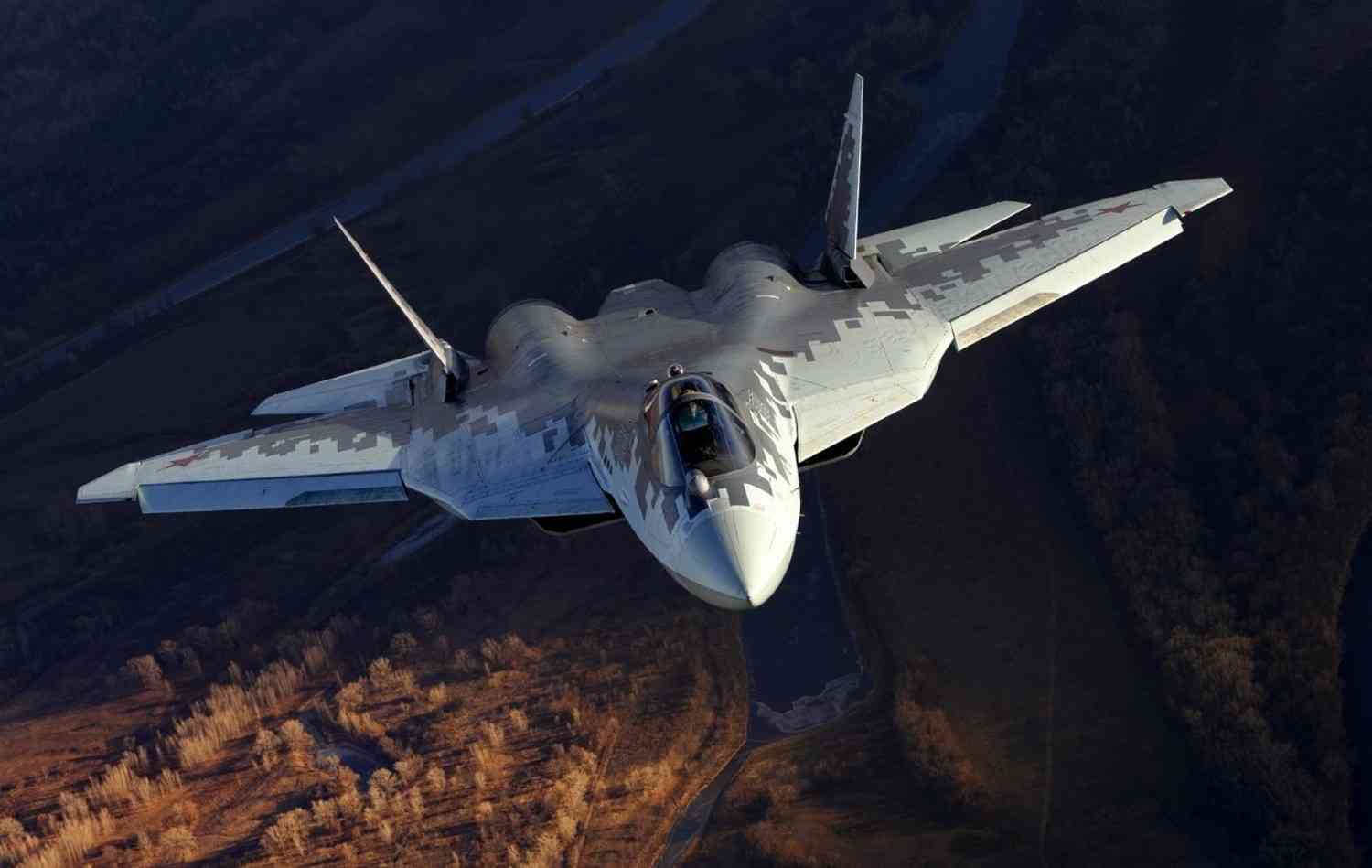
The Su-57 has become one of the most talked-about combat aircraft of the last decade, not just because of what it can do in the air, but because of the story surrounding its development. Born out of a program once known as PAK FA, the Su-57 represents Russia’s attempt to build a genuine fifth-generation fighter capable of standing alongside the American F-22 and F-35. Unlike those Western programs, however, the Su-57 has followed a slower, more iterative path, shaped by budget constraints, sanctions, and shifting priorities. Today, it sits at the center of Russian air power doctrine, combining stealth shaping, supermaneuverability, and networked sensor fusion into a single airframe. This article breaks down what makes the Su-57 distinctive, where it stands operationally, and why it continues to draw global attention.
What Makes the Su-57 a Fifth-Generation Fighter
A fifth-generation fighter is generally defined by low observability, advanced sensor fusion, internal weapons carriage, and the ability to share data seamlessly across a battle network. The Su-57 checks most of these boxes, though analysts still debate how close it comes to matching Western designs in radar cross-section reduction. Its airframe uses composite materials and careful shaping to reduce detectability, while internal weapons bays keep munitions tucked away from radar exposure. What separates the Su-57 from many rivals is its retained emphasis on aerodynamic agility. Thrust-vectoring engines give it exceptional maneuverability at both high and low speeds, a trait inherited from earlier Sukhoi designs like the Su-27 and Su-35. This blend of stealth-oriented engineering with traditional Russian dogfighting performance is what defines the aircraft’s identity in the fifth-generation conversation.
Design Philosophy and Airframe Features
The Su-57’s design reflects a dual mission set: contesting air superiority while also striking ground and naval targets. Its twin-engine layout, wide fuselage, and blended wing-body shape were built to balance stealth with raw performance rather than prioritizing one at the expense of the other. Key structural elements include:
- Internal weapons bays for air-to-air and air-to-surface munitions
- Radar-absorbent coatings applied across critical surfaces
- A reinforced airframe supporting high angles of attack
- Side weapons bays for short-range missiles, improving stealth during close engagements
This layout allows the Su-57 to carry a mixed loadout without external pylons compromising its radar signature. When stealth isn’t the priority, external hardpoints can still be used, giving pilots flexibility depending on mission type. That adaptability has been one of the aircraft’s selling points to both the Russian military and potential export customers.
Engines and the Long Road to Full Power
One of the most persistent talking points around the Su-57 involves its engines. Early production aircraft relied on the AL-41F1, an interim powerplant originally designed for the Su-35, rather than the purpose-built engine intended for the fifth-generation airframe. This delayed the aircraft’s ability to achieve true supercruise, sustained supersonic flight without afterburners, which is considered a hallmark fifth-generation trait. Russian engineers have since worked toward integrating a next-stage engine, often referred to as Izdeliye 30, designed to deliver greater thrust, improved fuel efficiency, and a reduced infrared signature.
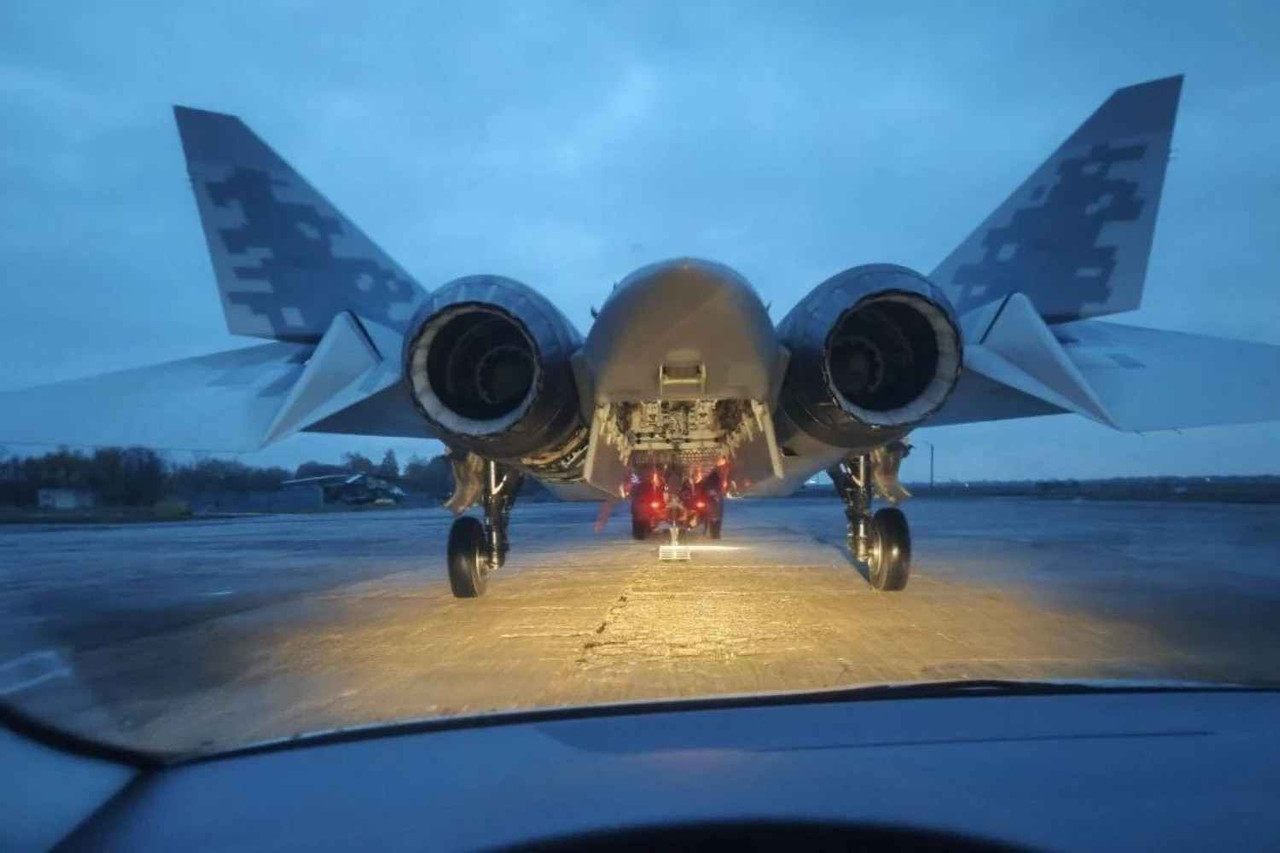
Flight testing of upgraded powerplants has continued in stages, with production aircraft gradually transitioning as manufacturing capacity allows. Until that transition is complete across the fleet, some observers argue the Su-57 hasn’t fully realized its intended performance envelope, even as it remains combat-capable with its current engines.
Sensors, Avionics, and Networked Warfare
Modern air combat depends heavily on situational awareness, and the Su-57 was built with that in mind. Its N036 Byelka radar system uses active electronically scanned array technology spread across multiple antennas, giving pilots wide-angle detection rather than a narrow forward-facing view. This is paired with infrared search and track sensors, distributed aperture-style missile warning systems, and an electronic warfare suite designed to jam or deceive enemy targeting radars. Together, these systems aim to give the Su-57 a layered awareness advantage even against low-observable adversaries. Perhaps more significant is the aircraft’s role as a networking hub. It’s designed to share targeting data with other platforms, including fourth-generation jets like the Su-35 and unmanned systems such as the S-70 Okhotnik. This “manned-unmanned teaming” concept lets a single Su-57 pilot coordinate drones or missile-carrying aircraft, extending reach while keeping the most valuable asset further from direct threats.
Weapons and Combat Loadout
Armament flexibility is central to the Su-57’s multirole identity. It’s built to handle air superiority missions, precision ground strikes, and anti-ship operations without needing a dedicated variant for each task. Typical weapons options include:
- Short and long-range air-to-air missiles carried internally for stealth missions
- Precision-guided bombs and stand-off munitions for ground targets
- Anti-radiation missiles for suppressing enemy air defenses
- A built-in autocannon for close-range engagements
- Anti-ship missiles for maritime strike roles
This broad weapons compatibility means the Su-57 can theoretically be reconfigured between missions with relative ease, a trait that appeals to air forces wanting one platform to cover multiple roles rather than maintaining separate specialized fleets.
Production Challenges and Fleet Growth
Despite ambitious early projections, Su-57 production has moved slower than initially planned. Sanctions targeting Russia’s access to high-end microelectronics and certain composite materials have complicated manufacturing timelines, forcing domestic substitution efforts that take time to mature. Prototype losses during testing years earlier also pushed back the program’s broader rollout. Even so, serial production has continued, with periodic batches delivered to the Russian Aerospace Forces featuring incremental upgrades, from revised cockpit displays to improved missile-warning sensors. The pace remains modest compared to Western fifth-generation programs, but steady deliveries suggest the Su-57 is transitioning from a limited showcase aircraft into a genuinely operational component of Russia’s air fleet, even if squadron-level saturation is still a work in progress.
Su-57 Quick Specifications Overview
| Category | Detail |
|---|---|
| Manufacturer | Sukhoi / United Aircraft Corporation |
| NATO Reporting Name | Felon |
| Role | Multirole air superiority and strike fighter |
| Crew | Single pilot |
| Engines | Twin, transitioning from AL-41F1 to next-generation powerplants |
| Radar | AESA-based N036 Byelka system |
| Weapons Bays | Internal main bay plus side bays for short-range missiles |
| Notable Trait | Thrust-vectoring supermaneuverability |
This table offers a simplified snapshot rather than exhaustive technical data, useful for quickly comparing the Su-57 against other fighters in casual research or defense discussions.
Export Ambitions and International Interest
Beyond domestic service, the Su-57 has become a diplomatic and commercial tool for Russia’s defense industry. An export-oriented variant has been marketed at international air shows, positioned as an affordable alternative to Western fifth-generation jets for countries facing procurement restrictions or budget limits. Discussions have touched on potential customers across different regions, with some nations expressing interest in either direct purchase or licensed production arrangements. These talks often move slowly, shaped by geopolitical pressure, sanctions risk for buyers, and uncertainty around delivery timelines. Still, the fact that multiple countries have publicly engaged with the program signals that the Su-57 carries genuine appeal outside Russia, particularly among states seeking to diversify away from Western suppliers or looking for a lower-cost entry into stealth aviation, even with the trade-offs that come with it.
Combat Use and Real-World Employment
Unlike some prototype-stage fighters that exist mainly for demonstrations, the Su-57 has seen employment in active combat environments, primarily using stand-off weapons launched from safer distances rather than deep penetration into contested airspace. This cautious approach reflects both the aircraft’s limited numbers and its high value as a strategic asset that Russia is reluctant to risk unnecessarily. Reports of strikes on Su-57 aircraft or related production facilities have occasionally surfaced, underscoring that even a stealth platform isn’t immune to modern long-range strike capabilities. This real-world exposure, while limited compared to legacy fighters, gives the Su-57 something many next-generation aircraft lack: actual operational data from live conditions, which likely feeds back into ongoing software and sensor refinements.
How the Su-57 Compares to Rival Fighters
Positioning the Su-57 against aircraft like the F-22, F-35, or China’s J-20 requires nuance rather than a simple better-or-worse verdict. The F-22 remains a benchmark for air-to-air stealth performance, while the F-35 emphasizes sensor fusion and multirole flexibility across allied fleets. The Su-57, by contrast, leans into agility and multirole weapons flexibility, sometimes at the cost of a more optimized radar cross-section. Its comparatively lower production numbers also mean it hasn’t achieved the fleet-wide integration seen in NATO air forces. That said, direct comparisons are complicated by the secrecy surrounding true stealth performance figures for any of these jets. What can be said confidently is that the Su-57 occupies a distinct niche, prioritizing maneuverability and adaptability over pure low-observable dominance.
Conclusion
The Su-57 remains a fascinating case study in how a major air power balances ambition against real-world constraints. It isn’t a perfect mirror of Western fifth-generation fighters, nor was it ever intended to be. Instead, it reflects Russia’s own priorities: maneuverability, multirole flexibility, and a networked approach to modern combat that ties manned and unmanned systems together. Production hurdles, engine transitions, and sanctions pressure have all slowed its path, but steady deliveries and continued upgrades suggest the program isn’t standing still. Whether through expanded domestic deployment or export deals still taking shape, the Su-57 is likely to remain a fixture in discussions about the future of air combat for years to come, evolving gradually rather than arriving all at once as a finished product.
Leave a Reply