
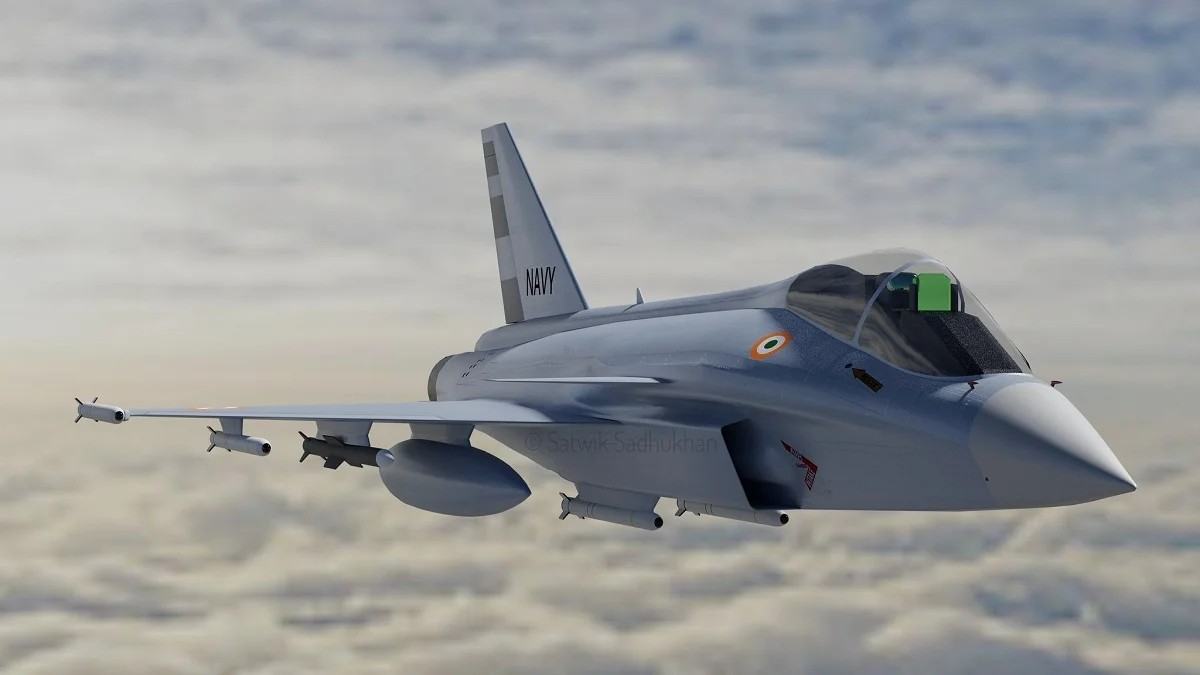
Naval aviation is entering a defining decade for India, and much of that shift centers on a single program: the TEDBF. Short for Twin Engine Deck Based Fighter, this indigenous aircraft is being built to give the Indian Navy a modern, carrier-capable combat jet that doesn’t depend on foreign suppliers for its future fleet. As aircraft carriers become more central to India’s maritime strategy, the need for a reliable, homegrown fighter that can operate from their decks has never been more pressing. This article breaks down what TEDBF actually is, why it was conceived, how its design differs from existing naval jets, and what its development timeline looks like heading into the next few years.
What Exactly Is TEDBF?
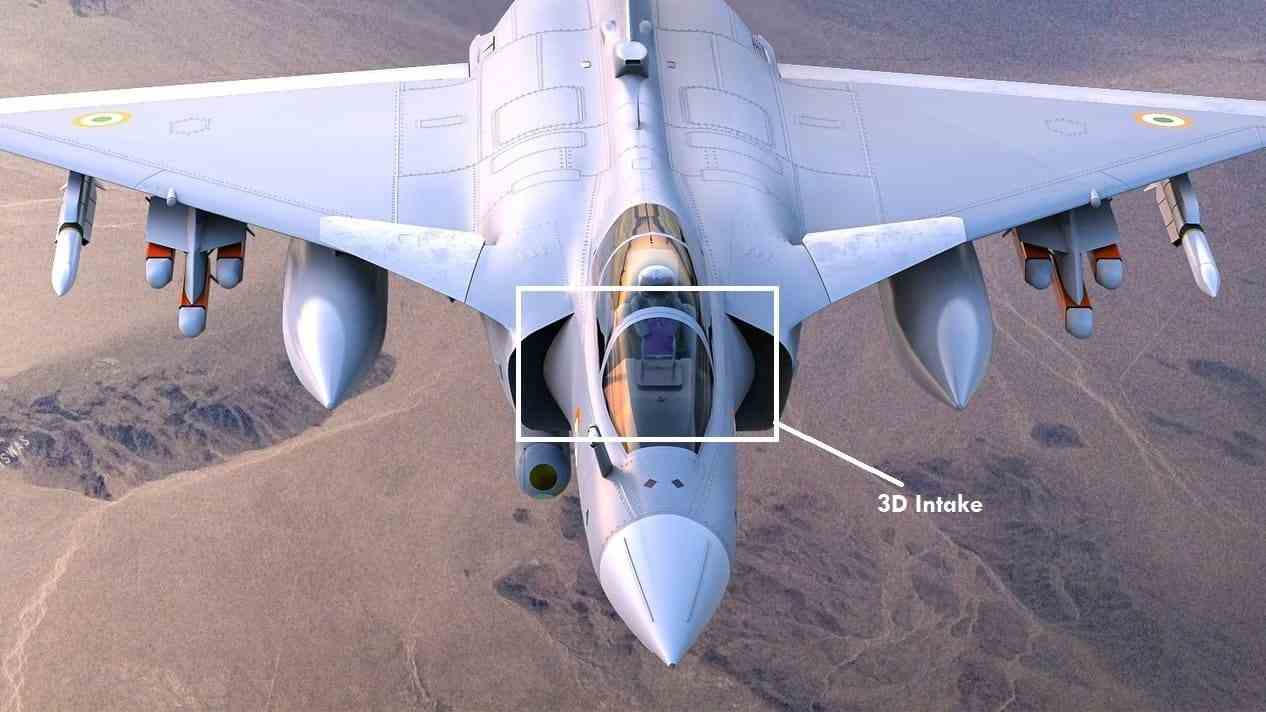
TEDBF refers to a twin-engine, carrier-based, multirole combat aircraft currently under development for the Indian Navy. It features a canard delta-wing configuration, a design choice that improves agility and lift during the demanding takeoff and landing sequences required aboard a moving aircraft carrier. Unlike land-based fighters, deck-based jets must handle short runways, arrested landings, and constant exposure to harsh maritime conditions, which makes their engineering considerably more complex.
The aircraft is being designed by the Aeronautical Development Agency, working under the Defence Research and Development Organisation, with manufacturing responsibilities expected to fall to Hindustan Aeronautics Limited. This combination mirrors the structure used for other indigenous fighter programs, pairing design expertise with established production capacity.
Why the Navy Needed a New Fighter
For years, the Indian Navy relied on the MiG-29K to operate from its carriers, but that aircraft has faced persistent serviceability and maintenance concerns. Rather than continuing to patch an aging platform, naval planners pushed for a fresh, purpose-built solution. Initially, there was interest in developing a navalized version of the Tejas Light Combat Aircraft, but a single-engine jet was seen as insufficiently powerful for the payload and range demands of modern carrier operations.
This dissatisfaction is what directly led to the TEDBF concept. A twin-engine layout offers redundancy, more thrust for shorter takeoffs, and better performance margins when operating heavy weapon loads from a ski-jump-equipped carrier deck. The Navy essentially asked for a jet that could match the capability of imported fighters while being built, maintained, and upgraded domestically over its service life.
How TEDBF Fits Into India’s Broader Fighter Ecosystem
The TEDBF program does not exist in isolation. It runs alongside other indigenous efforts such as the Medium Weight Fighter, formerly known as Tejas Mk2, and the more ambitious Advanced Medium Combat Aircraft project. Engineering lessons, materials research, and avionics work from these parallel programs feed directly into TEDBF, reducing duplication and accelerating development timelines.
Compared to the Naval version of the Advanced Medium Combat Aircraft, which is a heavier, stealth-oriented fighter expected only after 2030, TEDBF is deliberately lighter and intended to enter service sooner. This creates a layered naval fighter strategy: TEDBF handles near-to-mid-term carrier requirements, while the naval AMCA eventually takes on next-generation, low-observable missions further into the future.
Key Design and Technical Highlights
Several technical decisions define how TEDBF is expected to perform once operational. Below are some of the standout characteristics that separate it from older carrier-based jets:
- Canard delta-wing layout for enhanced maneuverability and controlled slow-speed handling during landing approaches
- Twin-engine configuration for greater thrust, redundancy, and payload capacity
- Compatibility with Short Take-Off Barrier Arrested Recovery carrier systems, including ski-jump launches
- Reduced radar cross-section shaping drawn from frontal design optimization shown in early public models
- Multirole mission capability spanning air superiority, strike, and anti-ship operations
These features collectively aim to make TEDBF a well-rounded replacement for aging carrier fighters, rather than a narrowly specialized aircraft limited to one type of mission.
Development Timeline and Testing Progress
Development of TEDBF has moved through several structured phases. The preliminary design phase began with aerodynamic sizing and refinement, followed by computational fluid dynamics analysis to fine-tune the airframe shape. Wind tunnel testing models were then built to validate both high-speed and low-speed handling characteristics, a critical step before any physical prototype takes to the sky.
Much of the groundwork for TEDBF actually came from the Naval Light Combat Aircraft program, which successfully demonstrated ski-jump launches, short takeoff distances, and arrested landings on an active carrier. Those proven techniques gave engineers confidence that the more advanced twin-engine design could follow a similar operational pathway without starting from zero.
Where the Program Stands Today
| Milestone | Status/Expectation |
|---|---|
| Preliminary design phase | Completed with aerodynamic and CFD refinement |
| Wind tunnel testing | Conducted for high and low-speed configurations |
| First flight | Targeted for around 2026 |
| Prototype availability | Expected within the next several years |
| Naval induction | Anticipated in the following decade |
| Manufacturer | Hindustan Aeronautics Limited |
| Design agency | Aeronautical Development Agency |
This table summarizes the general trajectory of TEDBF, though defense programs of this scale often see timelines shift as testing reveals new engineering requirements. Complex carrier aircraft rarely follow a perfectly linear schedule, and TEDBF is unlikely to be an exception.
Challenges the Program Still Faces
No fighter jet program of this magnitude comes without hurdles, and TEDBF is no different. Engine selection remains a significant consideration, since a twin-engine carrier fighter demands power plants capable of reliable performance under repeated high-stress launches and landings. Budget allocation, coordination between multiple defense agencies, and the sheer complexity of naval-specific engineering all add layers of difficulty that land-based fighter programs don’t face to the same degree.
There is also the broader question of how TEDBF will be prioritized against competing programs vying for funding and testing infrastructure. Balancing the Medium Weight Fighter, the Advanced Medium Combat Aircraft, and TEDBF simultaneously requires careful resource management. Delays in one program can ripple into others, since shared components, personnel, and testing facilities are often involved across these projects.
Why This Program Matters Beyond the Navy
Beyond its immediate military value, TEDBF represents a broader push toward self-reliance in defense manufacturing. A successful indigenous carrier fighter reduces dependency on foreign vendors for spare parts, upgrades, and long-term support, which has historically been a pain point for platforms like the MiG-29K. It also builds domestic expertise in an area, deck-based fighter design, that very few countries have mastered independently.
There has also been discussion around a land-based variant derived from the naval design, sometimes referred to informally as an Omni Role Combat Aircraft. If pursued, this version could serve the Air Force’s needs as well, extending the value of the underlying TEDBF engineering investment well beyond naval aviation alone.
Conclusion
The TEDBF program reflects a deliberate, long-term bet on India’s ability to design and build sophisticated carrier-based fighters at home rather than continuing to import them. From its canard delta-wing aerodynamics to its twin-engine reliability advantages, every design choice traces back to lessons learned from earlier naval aviation efforts and the practical shortcomings of existing jets like the MiG-29K. While the road ahead still involves rigorous testing, engine finalization, and careful timeline management, the foundational work already completed suggests steady progress rather than a program stuck on paper. As India’s aircraft carriers continue to expand their operational role, a capable, indigenously produced fighter like TEDBF could become one of the most consequential additions to the country’s naval airpower in decades, marking a genuine shift toward self-sufficiency in one of aviation’s most technically demanding fields.
Leave a Reply