Every time a major aviation incident makes the news, you’ll hear investigators mention recovering “the black box.” It’s one of the most recognizable phrases in aviation safety, and also one of the most misleading. The device isn’t black, it isn’t a single box, and understanding what it actually does reveals a lot about how modern aviation safety regulation actually works.
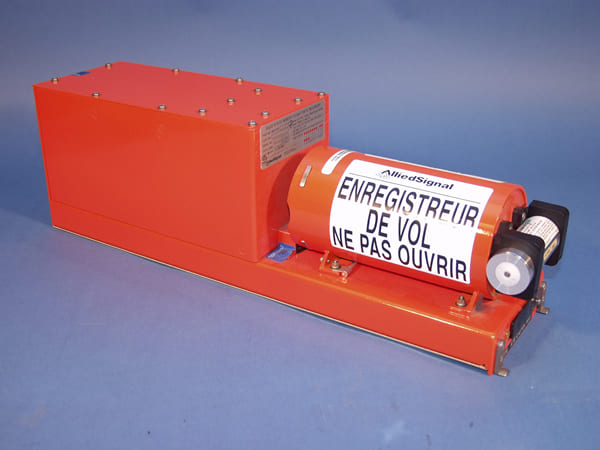
It’s Bright Orange, Not Black
The device commonly called a black box is officially known as a flight recorder, and it’s required by international regulation to be painted a highly visible international orange, precisely so search teams can spot it quickly in wreckage, water, or dense terrain. The “black” name is a holdover from aviation history, with a few competing explanations — some point to early recorders that used photographic film and had to be housed in a light-proof black casing, others to the charred, soot-blackened appearance recorders often had after being pulled from crash sites. Either way, the name stuck long after the boxes themselves stopped being black.
There Are Actually Two Separate Recorders
“Black box” also implies a single device, but aircraft are required to carry two distinct recorders, which are sometimes housed in the same unit and sometimes kept separate:
The Flight Data Recorder (FDR) continuously logs dozens of technical parameters throughout a flight — altitude, airspeed, heading, vertical acceleration, control surface positions, and often hundreds of additional readings, sampled multiple times per second. This is the recorder that lets investigators reconstruct, second by second, exactly what the aircraft itself was physically doing at any point in the flight.
The Cockpit Voice Recorder (CVR) captures audio from the cockpit — pilot conversation, radio communication with air traffic control, and ambient sounds like alarms, switch clicks, and engine noise. Modern CVRs typically retain the most recent two hours of audio, continuously overwriting older recordings unless the system is triggered to stop, since the recorder only needs to preserve what happened immediately before an incident, not an entire flight’s worth of cockpit conversation.
Together, these two recorders let investigators cross-reference what the aircraft was doing mechanically with what the crew was seeing, saying, and reacting to in the same moment — which is often far more revealing than either data source alone.
Why the Regulations Exist at All
Flight recorders aren’t just a good idea individual airlines adopted — they’re mandated internationally. The International Civil Aviation Organization (ICAO), the United Nations body that sets global aviation standards, requires both recorder types on most commercial aircraft and specifies exactly how survivable they need to be. This is a good example of how aviation safety regulation generally works: rules tend to exist because of specific historical incidents that exposed a gap, after which the fix becomes a permanent, internationally enforced requirement rather than a suggestion left up to individual manufacturers or airlines.

That survivability requirement is significant. Flight recorders are built to withstand forces and conditions most consumer electronics couldn’t come close to surviving — extreme impact forces, temperatures well above what a cabin fire could produce, and extended submersion in seawater. The engineering goal is straightforward: whatever else happens to the aircraft, the data storage unit inside the recorder needs to survive largely intact.
How the Data Actually Gets Used
When an incident occurs, recovered flight recorder data goes to specialized investigative laboratories, where analysts extract and cross-reference the FDR and CVR data against radar tracks, maintenance records, weather data, and witness accounts. This process is rarely quick — thorough investigations often take months, since investigators are reconstructing a precise sequence of mechanical and human events rather than looking for a single obvious cause.
Importantly, this data isn’t just used to explain what happened after the fact. Findings routinely feed directly back into regulatory and design changes — new maintenance procedures, revised pilot training requirements, or design modifications applied across an entire aircraft fleet. This feedback loop, from recorded data to investigation to regulatory change, is a big part of why commercial aviation has become dramatically safer over the decades, even as global flight volume has grown enormously.
Why This Still Matters to Everyday Travelers
None of this is background trivia for engineers alone. It’s a useful window into why aviation regulation looks the way it does: reactive in origin, but relentlessly thorough once a requirement is in place. The bright orange box in the tail of every commercial aircraft represents decades of accumulated lessons, each one turned into a permanent, internationally enforced rule — which is a big part of why flying remains, by most measures, one of the safest ways to travel long distances.
Leave a Reply